
1. What is the Maharashtra Electronics Policy?
The Maharashtra Electronics Policy is designed to promote investment, manufacturing and technology development in the Electronics System Design and Manufacturing (ESDM) sector. The policy provides sector-specific incentives in addition to the broader industrial incentive framework of Maharashtra.
2. Who Can Benefit from the Policy?
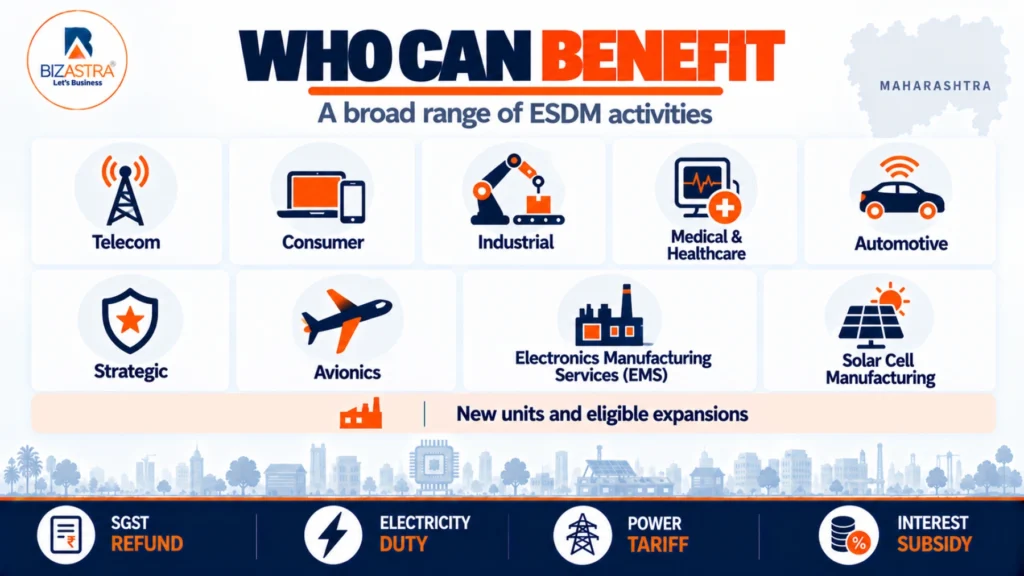
The policy is applicable to eligible new ESDM units, as well as existing electronics units (brownfield and greenfield projects) undertaking expansion, subject to the prescribed conditions. The policy covers a broad range of electronics-related activities, including:
- Telecom Electronics
- Consumer Electronics
- Industrial Electronics
- Medical and Healthcare Electronics
- Automotive Electronics
- Strategic Electronics
- Avionics
- Electronics Manufacturing Services (EMS)
- Solar Cell Manufacturing
Eligibility depends on the nature of manufacturing activity, project structure, location and applicable policy conditions.
3. What Support is Available for Expansion Projects?
Existing electronics manufacturing units can also receive policy support for eligible expansion or diversification projects. Such projects are required to meet the prescribed conditions relating to additional investment, production capacity and employment generation. The objective is to ensure that incentives are linked to genuine expansion and growth of the existing manufacturing facility.
4. What Incentives are Available?
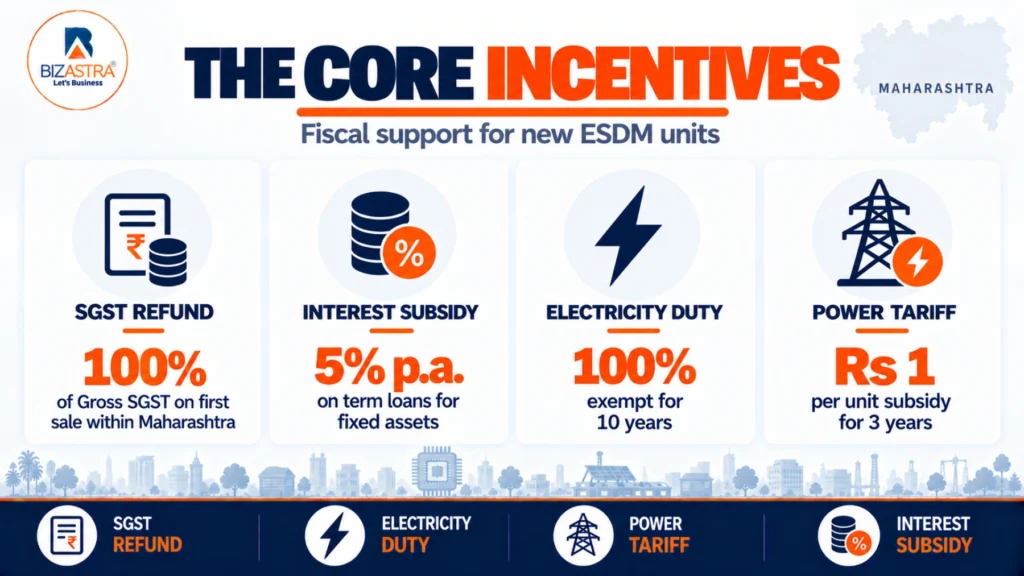
Eligible ESDM units can benefit from a range of fiscal and non-fiscal incentives.
| Sr. No. | Benefit | Incentive Details |
|---|---|---|
| 1 | Refund of Gross SGST | 100% of Gross SGST payable on the first sale of eligible products, billed and delivered within Maharashtra. |
| 2 | Interest Subsidy at 5% p.a. | 5% interest subsidy on interest actually paid to banks on term loans taken for acquisition of fixed assets. |
| 3 | Exemption from Electricity Duty | New units are exempted from payment of electricity duty for 10 years. |
| 4 | Power Tariff Subsidy | New units are eligible for a power tariff subsidy of ₹1 per unit for 3 years. |
The actual benefit available depends on the project’s eligibility, location, investment category and applicable approval conditions.
5. What Makes Maharashtra Attractive for Electronics Manufacturing?
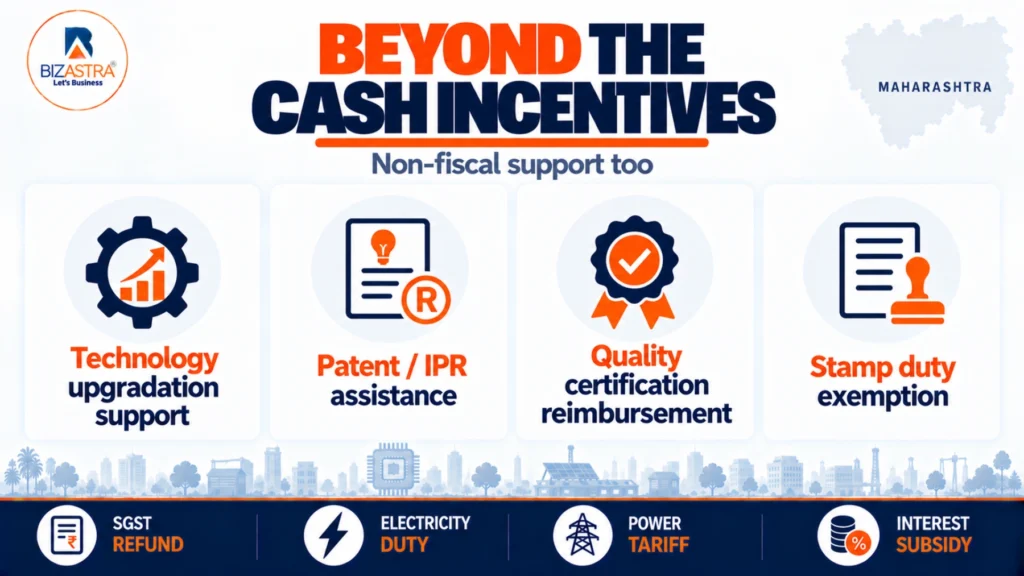
Maharashtra offers a favourable ecosystem for electronics manufacturing, supported by established industrial infrastructure, strong connectivity, access to a large consumer market and the presence of a developed supplier and vendor network. The state also has access to skilled manpower and established industrial clusters, which can help electronics manufacturers build and scale their operations efficiently. In addition to these ecosystem advantages, eligible units can benefit from various fiscal and non-fiscal incentives available under the state’s industrial and electronics-related policy framework.
6. What Should Businesses Consider Before Setting Up an ESDM Unit?
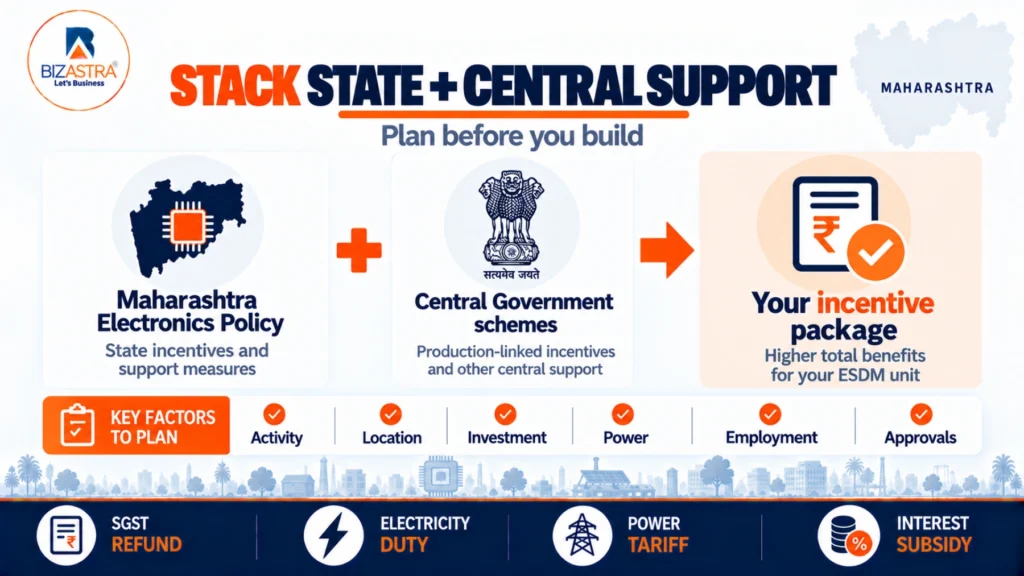
Before setting up an ESDM manufacturing facility in Maharashtra, an investor should evaluate the proposed manufacturing activity, project location, investment structure and applicable eligibility conditions. It is also important to assess the incentives available under the state policy along with relevant Central Government schemes. A proper assessment of land, infrastructure, power requirements, employment generation and statutory approvals can help the investor structure the project effectively and maximise the benefits available under the applicable incentive framework.
7. Frequently Asked Questions
What is ESDM?
ESDM stands for Electronics System Design and Manufacturing. It broadly covers activities related to the design, development and manufacturing of electronic products, systems, components and related technologies.
Does the Electronics Policy cover only semiconductor companies?
No. The electronics sector covers a much wider range of activities. Eligible segments can include consumer and industrial electronics, telecom electronics, medical electronics, automotive and strategic electronics, electronics manufacturing services, solar cells and other specified electronics and semiconductor-related activities.
Can existing electronics units avail benefits?
Yes. Existing eligible electronics manufacturing units undertaking expansion or diversification may also be considered for incentives, subject to the applicable conditions. The expansion must generally meet the prescribed investment and operational requirements.
Are technology upgrades supported?
Yes. The policy framework provides support for eligible technology upgradation and equipment improvements. This is intended to encourage manufacturers to adopt modern technologies and improve their production capabilities.
Is there support for patents and quality certifications?
Eligible units can receive assistance towards patent-related expenses and quality certification costs, subject to the applicable conditions and prescribed limits. These incentives are intended to encourage innovation, intellectual property creation and adoption of recognised quality standards.
Can large electronics projects receive customised incentives?
Large and strategically important electronics projects may be considered for customised incentive packages, subject to their eligibility and the applicable Government approval mechanism. This allows the incentive structure to be tailored to the requirements of significant investments.
8. How Can BizAstra Help?
For an electronics manufacturing project, identifying the right incentive structure requires an assessment of the project’s location, investment, manufacturing activity and applicable policy provisions. BizAstra helps businesses evaluate state and Central Government incentives, structure their projects for optimum benefits, assess incentive eligibility, prepare applications and documentation, and support the incentive claim process.
9. Want to Know the Incentives Available for Your Electronics Project?
Every electronics manufacturing project has a different incentive potential depending on its location, investment, activity and scale. A project-specific assessment can help identify the applicable incentives and ensure that the investment is structured effectively from the beginning.
Contact BizAstra for an Incentive Assessment
Disclaimer: The information provided in this article is for general informational purposes only. The applicability of incentives, eligibility conditions, benefit limits, approval requirements and other provisions may vary depending on the project, location, sector, investment size and the policy applicable at the time of application. Investors should obtain a project-specific assessment and verify the applicable Government provisions before making investment or financial decisions.